Malware on the Rise

Diposting oleh Admin on Selasa, 16 Oktober 2012


Malware is the thing to look out for these days. McAfee claims that they tracked more than six million different unique malware samples in the first quarter alone. Those numbers make the first quarter the most active quarter for malware issues ever.

In a statement, Vincent Weafer, the senior vice president of McAfee Labs, said, "It's been a busy start to 2011 for cybercriminals."

McAfee went on to say that February was the most active malware month. In February, 2011 there were 2.75 million samples alone. According to the company, in March, 2011 there were also more than 350,000 fake anti-virus software samples, which was the highest level in over a year; however, partially in part to the demise of the Rustock botnet, spam is at the lowest level since 2007.

"Even though this past quarter once again showed that spam has slowed, it doesn't mean that cybercriminals aren't actively pursuing alternate avenues," Weafer continued. "We're seeing a lot of emerging threats, such as Android malware and new botnets attempting to take over where Rustock left off, that will have a significant impact on the activity we see quarter after quarter."

The most popular OS for mobile malware is still Symbian, but McAfee reported that Android is gaining on Symbian and came in at number two. McAfee thinks that Android isn’t number one because Google allows for the side-loading of Android apps. This means that it does not have a main spot where it checks apps for any possible suspicious behavior.

Just this past week, Google had to remove more than two dozen apps from their Android Market due to malware issues. NetQuin, a mobile security firm, also identified more than 20 malware filled Android apps that went to the extent of auto-dialing phones to pile up high user fees.

When dealing with spam, McAfee tracked more than 1.5 trillion messages each and every day, but thankfully that number is less than half of what it was just a year ago.

Government agencies across the globe have been working hard to crack down on cybercrime. In September dozens of international cyber-gangsters who were responsible for the creation and spread of the Zeus botnet were arrested. Also, thanks to Microsoft, FireEye (an anti-malware company), the University of Washington and Pfizer (a pharmaceutical firm) Rustock was taken down in March.

In their statement McAfee warned that the creators of the Zeus bot are hard at work merging the Zeus code with the SpyEye botnet. This would affect banking and online transactions, so it could cause some major issues if it isn’t handled.

"There was a strong uptick in new botnet infections toward the end of Q1, most likely due to the reseeding process, where cybercriminals slow down activity in order to spend time rebuilding botnets," McAfee said. "The botnet takedowns have resulted in an increase in the price of sending spam on the underground marketplace, showing that the laws of supply and demand also apply to cybercrime."

So why are people even falling for these threats? Well, cyber-criminals are very sophisticated these days. They make their scams look legit, so it’s hard to tell that it’s a threat sometimes until it’s too late. It seems that the spam that is promoting an actual product seemed to lure in the most people. IGNORE the e-mails advertising iPads and HDTVs. McAfee also noted a rise in “banker” Trojans. They lure people in talking about things like UPS, FedEx, USPS and the IRS. Unfortunately, on top of that, scammers are also taking advantage of crisis events like the Japan earthquake and tsunamis.

It’s just important to pay attention to what you are opening up or downloading before you do it. If you’re careful and take the necessary precautions, you should most likely be able to avoid any issues.

Definition of Malware
More aboutMalware on the Rise

Japan's K Computer Remains as the World's Most Powerful Supercomputer

Diposting oleh Admin

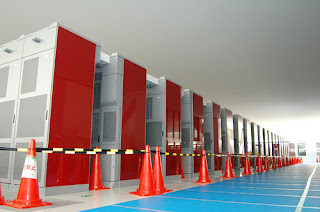
K ComputerThere is a recently released list of the Top 500 most powerful computers in the world, and once again Japan's K Computer takes the number one spot with an increase from 8.162 petaflops to 10.51 petaflops per second. This balances out to 10.51 quadrillion floating-point operations per second. The letter "K" is short for the Japanese word "kei", which symbolizes 10 quadrillion. Coincidence? I think not.

On the Top 500 list from June, the K Computer took the number one spot out of the hands of China's Tianhe-1A system. The Tianhe-1A remains in the number two spot at the moment at 2.57 petaflops. Following in the number three spot is the Oak Ridge National Lab's Jaguar supercomputer. After that, the rest of the list looks pretty much the same as the last, with many companies holding the same spots as they previously did. According to TOP500 editor Erich Strohmaier, "This is the first time since we began publishing the list back in 1993 that the top 10 systems showed no turnover."

The K Computer, which is installed at the RIKEN Advanced Institute for Computational Science (AICS) in Kobe, Japan in partnership with Fujitsu, uses 705,024 SPARC64 processing cores. If you want to know just how many that is, it is more than the rest of the top five on the list combined. In addition to that, the K Computer uses 12.66 megawatts of power, four times more than its nearest competitor. This is also more than the 9.89 megawatts of power the computer recorded in June. However, despite these high numbers, the K Computer is still one of the most efficient supercomputers on the list, delivering 830 Mflops per watt.

The K Computer was installed in 672 racks back in June. An expansion of 800 cabinets allowed the 10 petaflop achievement to be accomplished. Just a week ago, Fujitsu announced the expansion possibilities of the K Computer as it could possibly grow to a theoretical 23 petaflops.

Aside from the rankings remaining unchanged, other characteristics evolved with the November 2011 list. The entry point for being on the Top 500 list is now at 50.9 teraflops with the combined performance across all 500 supercomputers being 74.2 petaflops, an increase from the 58.7 petaflops recorded in June. Gigabit Ethernet is still the most popular internal system interconnect, being used in 223 systems. However, InfinfBand use increased to 213 systems.

Average power consumption continued to rise with 29 systems on the list confirmed at using more than one megawatt of power. The most energy efficient supercomputers are BlueGene/Q with 2,029 Mflops per watt. IBM just filed a patent for a massive supercomputer that could potentially reach 107 petaflops. In total all of the systems that reported in on power consumption combined for more than 159 megawatts.


Source: Data Center Knowledge - K Computer Still the Most Powerful Supercomputer
More aboutJapan's K Computer Remains as the World's Most Powerful Supercomputer

A Walk in the Clouds to Unlimited Storage

Diposting oleh Admin


Do you get tired of constantly having to upgrade to a bigger hard drive? Wouldn’t it be awesome if you could have unlimited disk space? What if you could access your files from anywhere and any device? As a photographer I can’t tell you how invaluable this would be! Photos take up lots and lots of space. To get a good quality print just one photo can take 5mb of space and when you are dumping 150 photos onto your hard drive after every shoot, it doesn’t take long to fill it up.

A new beta software just might be the solution. It’s from a startup called Bitcasa; when you install it, the capacity of your computer's hard drive becomes, essentially, infinite! It is currently only available for Apple computers but a Windows version is in development; and plans of apps for mobile devices are in the works as well.

Bitcasa creates the illusion of unlimited hard drive space but the files are kept on a cloud server. Your computer will respond to opening any file as if it is local and there would be no wait for downloads, even videos!

Using a storage service is not a new concept. Dropbox, SkyDrive, Google Docs, Amazon and countless others have been offering online storage for some time. But Bitcasa is not like any of those services. It doesn’t move files around or sync. Bitcasa doesn’t know what the file is, what the name is, what the contents are or anything about the file itself. It only deals in bits and bytes, the 1′s and 0′s of digital data. Data is encrypted on the client side. This is kind of like contemplating the universe for me because I am amazed that my photos can go from a picture to zeros and ones and back again.

Bitcasa is only $10.00 a month! Ten dollars for unlimited space? How can that be? Bitcasa CEO Tony Gauda says $10/month still gives the company large margins. The fact is, 60% of data is duplicate. For example, if I have an MP3 of the Foo Fighters new single and someone else has it too, those would be made up of the same zeros and ones. I think that’s amazing! Also times are hard so if $10.00 a month is hard to squeeze from your budget, a less than unlimited free version is on its way. Bitcasa will be free while in limited beta trials.

More aboutA Walk in the Clouds to Unlimited Storage

Microsoft Kinect for PC Coming Soon

Diposting oleh Admin


On Tuesday, November 22 Microsoft announced that it is working on getting its Kinect motion-sensing device ready to use on PCs that run Windows. The company currently sells Kinect for its Xbox 360 gaming console; however, it is hard at work and says that it will have the PC version ready by early 2012.

"Coupled with the numerous upgrades and improvements our team is making to the Software Development Kit (SDK) and runtime, the new hardware delivers features and functionality that Windows developers and Microsoft customers have been asking for," wrote Craig Eisler, general manager of Kinect for Windows, in a blog post.

"Simple changes include shortening the USB cable to ensure reliability across a broad range of computers and the inclusion of a small dongle to improve coexistence with other USB peripherals," Eisler continued. "Of particular interest to developers will be the new firmware which enables the depth camera to see objects as close as 50 centimeters in front of the device without losing accuracy or precision, with graceful degradation down to 40 centimeters. 'Near Mode' will enable a whole new class of 'close up' applications, beyond the living room scenarios for Kinect for Xbox 360. This is one of the most requested features from the many developers and companies participating in our Kinect for Windows pilot program and folks commenting on our forums, and we're pleased to deliver this, and more, at launch."

This announcement about the PC version of the Kinect comes on the exact same day that Microsoft officially acquired VideoSurf. Microsoft acquired the company, which was founded in 2006, for $70 million. It hopes to incorporate the California-based company’s online video search technology into the Xbox Live system.

According to a statement released by the companies on Tuesday, November 22, VideoSurf "offers a back-end computer vision technology that 'sees' frames inside videos to make discovering content fast, easy and accurate."

"VideoSurf's content analytics technology will enhance the search and discovery of entertainment content across our platform," said the director of Xbox Live for Microsoft's Interactive Entertainment Business Alex Garden. "This holiday we will launch voice search across our entertainment partners on Xbox Live. Over time, as we integrate VideoSurf's technology into our system, we are excited about the potential to have content tagged in real time to increase the speed and relevance of the search results.”

According to Microsoft, the acquisition would "make it easier for world-class video partners to take full advantage of advanced features such as voice search enabled by Kinect for Xbox 360."

Microsoft also said that in the next few months it will bring "nearly 40 world-leading TV and entertainment providers to Xbox Live." These will include Bravo, Comcast, HBO GO, Verizon FiOS, and Syfy in the U.S.; BBC in the U.K.; Telefónica in Spain; Rogers On Demand in Canada; Televisa in Mexico; ZDF in Germany; and Mediaset in Italy.

"Microsoft's Interactive Entertainment Division is at the leading edge of connected entertainment," said Lior Delgo, the CEO and co-founder of VideoSurf, in the statement that they released with Microsoft. "We are incredibly excited to be working together on our mutual passion for creating amazing consumer experiences and reinventing how consumers search, discover and enjoy content on their televisions."


Source: PCMag - Microsoft Preps Kinect for PCs Hardware, Firmware
More aboutMicrosoft Kinect for PC Coming Soon

HP Releases Seven All-in-One PCs

Diposting oleh Admin


Even though Hewlett-Packard might stop selling WebOS devices and move its PSG (Personal Systems Group) into a separate company, they haven't been stopped from unveiling seven new PC's today. They updated their Omni, TouchSmart and HP Pro lineups. These PC's all have starting prices ranging from $400 to $900. So even though they might not be keeping their PSG division around (which is responsible for desktops and laptop PCs), they are making it clear they still plan to be a leader in the PC market. HP plans on all-in-one PCs becoming a huge seller next year and even cited that they expect interest to grow from 9.9 percent to 15.7 percent in the next 12 months.

The first two PCs they are rolling out are the Omni 120 and the Omni 220. The Omni 120 has a 20-inch screen and will offer up to 750 GB of hard drive space and your choice of an AMD or Intel processor. The 21.5-inch Omni 220 will have a unique cantilever design and will have Intel's 'Sandy Bridge' core processors. The Omni 220 will be available September 11 starting at $800 dollars, followed by the Omni 120 becoming available September 21 with a starting price tag of $400.

HP also plans to release four new TouchSmart PCs around the same time. The TouchSmart 320 has a 20-inch screen and won't be in stores until October 2 with a starting price of $600. The 21.5-inch Touchsmart 420 and 23-inch Touchsmart 520 will be available September 11 with starting prices of $700 and $900. All of the PCs come with touchscreen displays and include Beats Audio technology.

The fourth TouchSmart being launched is the Touchsmart Elite 7320 Business PC. This all-in-one computer comes with a 21.5-inch HD LED back-lite display. You will be able to choose a Core i3, i5, or i7 processor and HP plans to launch this model September 21, starting at only $850.

The last all-in-one PC, which has no confirmed launch date but should hit stores sometime in October, is the HP Pro 3420. This computer network features a 20-inch display, Core i3 processor, up to 8GB of RAM, and up to 2TB of hard drive space. The starting price of this PC is set to be $600.

Source: PC World - HP Announces Seven New All-in-One PCs
More aboutHP Releases Seven All-in-One PCs